
Find Cheap Ammo Deals That Won't Break Your Bank Account
Shooting often feels too expensive to enjoy, but cheap ammo solves that by delivering reliable rounds at a fraction of the cost. It works just like standard ammunition, using proven components that keep your firearm cycling smoothly without breaking the bank. The biggest benefit is simple: you can practice more often, build better skills, and have fun at the range without cringing at the checkout. Just pair budget-friendly cartridges with a quick 6.5×55 Swedish Ammo for Sale function check, and you’ll get dependable performance for every session.
Why Low-Cost Rounds Are Worth Considering for Regular Shooting
Low-cost rounds make regular shooting financially sustainable, letting you build muscle memory and trigger control without burning through your premium stash. Cheap ammo is perfect for high-volume drills, malfunction clearances, and zeroing optics—where precision matters less than repetition. The savings across hundreds of rounds fund more range time, which directly translates to faster target acquisition and smoother recoil management. Why skip expensive match loads for practice? Because a budget box still cycles your action, teaches your flinch response, and confirms your firearm’s reliability under normal conditions. Simply put: shooting cheap ammo regularly keeps your skills sharp and your wallet open for the occasional premium session. Q: Are low-cost rounds accurate enough for practice? A: Yes, for practical distances under 25 yards, their minute-of-angle variance rarely affects your improvement trajectory.
Key Differences Between Budget and Premium Cartridges You’ll Actually Notice
The most tangible gap between budget and premium cartridges is consistency in powder charges, which directly affects your point of impact. Cheap ammo often shows wider velocity swings, causing vertical stringing on targets beyond 50 yards, while premium rounds hold tighter extreme spreads. You’ll also notice case quality: budget brass may have thicker rims or uneven primer pockets, leading to occasional hard extractions or misfires. Bullet construction differs, too—budget soft points flatten or fragment at higher impact speeds, whereas premium bonded cores retain weight for deeper penetration. Finally, budget cartridges leave more fouling in the bore, requiring more frequent cleaning, while premium loads burn cleaner, keeping your groups tighter for longer sessions.
Where the Savings Come From Without Sacrificing Core Performance
The savings come from cutting non-essential extras, not the bullet’s job. You’re paying for simpler packaging, high-volume manufacturing, and sometimes slightly less consistent brass or primers—none of which affect reliable ignition or acceptable accuracy at typical practice distances. Powder charges may be less precisely metered, but within safe tolerances, so you still get functional recoil and velocity. These rounds skip premium QC checks and polished cases, trimming costs on things you won’t notice when punching paper. You lose frills, not fundamentals.

Cost drops by eliminating fancy packaging and strict cosmetic checks, while core ignition, velocity, and accuracy .35 Remington Ammo for Sale remain fully usable for regular drills.
How to Compare Prices Per Round When Buying Budget Ammunition
When buying cheap ammo, always calculate the price per round by dividing the total box cost by the number of cartridges, not the box’s sticker price. For bulk deals like 500 or 1,000 rounds, compare the per-round figure against smaller boxes to spot hidden savings. Factor in shipping and tax, as these can inflate a low advertised price; a $12 brick of 50 might effectively cost $0.26 per round after fees versus $0.24 for a case. Check if the cheap ammo is remanufactured or new, since reloads can fail more often, making a slightly higher per-round cost worthwhile for reliability. A seemingly cheaper option loses value if you burn extra rounds malfunction testing. Always compare same caliber and bullet weight, and use online calculators or spreadsheets to track across stores.
The Real Cost Breakdown: Shipping, Bulk Discounts, and Case Pricing
When stacking up cheap ammo deals, the sticker price is only half the story—shipping can quietly add $15–$30 to a single box order, which wrecks your per-round math. Always filter by free-shipping thresholds or buy enough to hit them. Bulk discounts kick in around 500 rounds, but the real sweet spot is case pricing at 1,000 rounds, where per-round costs often drop 10–20% versus smaller quantities. Factor in hazmat fees if you’re buying primers or powder, but for loaded ammo, those rarely apply. Compare total cost—ammo plus shipping—divided by rounds, not the per-box price. A “cheap” 50-round box at $14 with $12 shipping costs you 52 cents a round, while a 1,000-round case at $260 with free shipping runs 26 cents. That gap is your real savings.
Always calculate total landed cost—including shipping and bulk/case tier pricing—because per-round price only makes sense after those variables are added in.
How to Spot a Genuine Deal Versus a Marked-Up "Value" Label

Ignore the big "VALUE" banner and crunch the math to cents-per-round before you trust it. A genuine deal drops below the average price you’ve seen for that exact grain and brand over the past month—check three or four retailers, not just one. A marked-up label hides behind a high manufacturer’s suggested retail price, making 30% off look heroic when the real street price is lower elsewhere. Spot the trick by comparing the discounted number to the actual going rate, not the sticker. If the per-round cost still sits above what other stores charge on a normal day, it’s just inflated anchor pricing, not savings. Also, verify the shipping cost—a $5 discount evaporates under $15 freight. A true deal survives the final, all-in cost per round.
Run the cents-per-round against current market prices, factor shipping, and ignore inflated MSRPs—if it’s not below the 6.5x57R Ammo for Sale real average, the “value” label is a markup.
Best Calibers and Grain Weights for Finding Affordable Practice Loads
For stretching dollars on range time, 9mm and .223 Remington are your cheapest allies, but grain weight matters more than most shooters think. In 9mm, stick with 115-grain full metal jacket loads—they’re the most mass-produced, meaning prices stay rock-bottom, and recoil is light enough for high-volume drills. Heavier 124s cost a bit more and aren’t worth the premium unless your gun jams on light loads. For .223, 55-grain FMJ boat-tails dominate surplus and budget lines, so 6.8 SPC Ammo for Sale they’re the clear win for plinking; 62-grain “green tip” is often cheaper per round in bulk, but it’s heavier and can shift your zero, making it less ideal for fast practice.
Always check the per-round price of 115g 9mm and 55g .223 before anything else—they’re the volume kings that keep practice affordable.
Skip exotic calibers like .357 Sig or 6.5 Creedmoor for pure practice; their ammo scarcity keeps prices high, defeating your budget goal.
Which Common Cartridge Sizes Offer the Lowest Cost Per Trigger Pull

When you’re chasing the lowest cost per trigger pull, 9mm Luger and .22 LR are the undeniable champs. For centerfire, 9mm wins because bulk-packed 115-grain FMJ loads routinely dip below 25 cents a round, while .40 S&W and .45 ACP often run 35–50 cents. Rimfire .22 LR crushes everything at 6–10 cents per shot, making it the absolute cheapest way to build muscle memory. .380 ACP is pricier than 9mm, and 5.56 NATO sits around 40–50 cents even for budget M193. Stick with 9mm for semi-auto practice and .22 LR for pure volume—they’re the only sizes where you can burn hundreds of rounds without wincing.
How Bullet Weight and Velocity Affect Price—and Which to Pick for Range Days
Bullet weight and velocity directly shape what you pay per round, since heavier projectiles cost more to manufacture and hotter loads .32 Win Special Ammo for Sale require extra powder and primer. For range days, stick to affordable practice loads in the middle of your caliber’s weight range—like 115-grain 9mm or 55-grain .223—because they balance material costs with reliable cycling. Lighter bullets sometimes reduce recoil but can demand stiffer powder charges to reach velocity, negating savings; heavier bullets raise price per box without improving training value. Choose the lowest practical velocity that still functions your firearm, then verify accuracy at 25 yards.
- Test a light, mid, and heavy load in your gun.
- Compare cost per 50 rounds, ignoring velocity claims.
- Pick the cheapest option that cycles and groups under 2 inches.
Reliability and Accuracy Tips for Shooting Economical Ammo Safely
Shooting cheap ammo reliably starts with a thorough inspection—sort out any rounds with dented cases, loose primers, or corroded brass before loading. To improve accuracy with budget loads, test several brands in your specific firearm, since barrels vary in their preference for bullet weight and profile; keep a small log of group sizes at 25 yards. Clean your gun more frequently, as economical ammo often burns dirtier, and carbon buildup can cause failures to feed or extract. For safety, avoid slamming the slide on the first round—let it ride forward naturally to reduce misfeeds. Q: Why does my cheap ammo keyhole sometimes? A: It is usually an undersized bullet or inconsistent powder charge, so shoot slower and check your target for sideways holes. Finally, run a few fouling shots before zeroing, as cheap ammo’s copper fouling can shift point of impact early on.

How to Test for Consistent Cycling and Grouping in Your Firearm
To validate cheap ammunition, begin by firing five-round groups from a rested position at 50 yards, recording each group’s diameter and noting any failure-to-feed or ejection issues separately from accuracy. Cycle consistency requires observing the bolt’s action over 200 mixed rounds—track whether slide locks back on empty mags and if extraction is snappy. For grouping, shoot three consecutive five-shot groups with cooling intervals; overlapping centers indicate the ammo’s reliable accuracy potential, while fliers beyond 2 inches signal inconsistent powder charges. Compare these results against a known premium load as baseline. Finally, test under rapid-fire (two shots per second) to see if cycling remains crisp under stress.
Test cheap ammo by measuring five-round groups at 50 yards, tracking bolt action across 200 rounds, and comparing rapid-fire performance against a premium baseline.
Cleaning Adjustments Needed When Switching to Budget Rounds
Switching https://specialtysportsandsupplyltd.com/ to budget rounds often demands a stricter cleaning schedule because their powder formulations tend to leave heavier carbon and fouling residues. You must adjust your cleaning intervals to prevent buildup from affecting bolt lugs and chamber headspacing, which accuracy depends on. Specifically, clean the bore after every 50–100 rounds instead of your usual longer stretch, and pay extra attention to the gas port or piston if shooting a semi-auto. Budget rounds require a more aggressive solvent protocol to remove copper fouling that cheaper jackets leave behind, so incorporate a copper remover every third cleaning session. Finally, re-lubricate moving parts lightly after each cleaning, as harsh solvents strip factory grease faster.
Where to Buy Low-Cost Rounds Without Getting Burned Buying Online
For cheap ammo without getting burned, stick to established online retailers like Target Sports USA, SG Ammo, or Brownells, which publish transparent shipping costs and stock real-time inventory. Cross-reference their per-round price with current ammoseek.com listings, but only buy from vendors with a physical address and a 6.5x57mm Mauser Ammo for Sale verified customer-review history on forums like r/gundeals. Always pay with a credit card, not a debit card or wire transfer, to ensure chargeback protection if the order never arrives or arrives damaged. Be wary of deals 20% below market average, as these frequently signal gray-market reloads or counterfeit imports. Verify the lot number and headstamp matches the manufacturer’s listed SKU before completing checkout, and request shipping insurance on any order exceeding $200, since most disputes stem from lost “signature-free” deliveries. Remember that the cheapest per-round price often neglects hazmat fees and split-case penalties, so calculate all-in cost to your door before hitting “buy.”
Trusted Retailer Signs: Return Policies, Lot Numbers, and Customer Reviews
A solid retailer quietly signals trust through three concrete signs. First, a clear return policy for damaged or defective ammo shows they stand behind their stock, even on budget rounds. Second, they display lot numbers in the product listing or on the box—that lets you check for recalls or avoid a bad batch others have flagged. Finally, skim reviews for words like “misfire” or “case split,” not just “great price.” A pattern of failures on a specific lot number is a red flag you can’t afford to ignore. If a seller hides lot info and has no return path, walk away—cheap only helps if it actually fires.
How to Verify Packaging Integrity and Spot Remanufactured vs. Surplus Stocks
Before paying for budget ammunition, .338 Lapua Ammo for Sale inspect the factory box for pristine seals, crisp printing, and intact corner welds—torn or re-taped cardboard signals tampering. Check that the primer sealant is undisturbed and the case mouths show no visible setback or crimp damage. To spot remanufactured vs. surplus stocks, compare headstamp consistency: mixed years or military codes (e.g., LC, WCC) indicate surplus, while a uniform, commercial headstamp on reloaded brass points to remanufacturing. Surplus often has sealed primers and corrosive primers, so look for dark, tarnished cases or dented projectiles. Reman rounds may show resizing marks or a slightly flattened primer—both red flags. When in doubt, shake the box; loose, rattling rounds suggest poor crimping or worn dies, not factory fresh output.
Q: How can I tell if a sealed box actually contains fresh factory rounds versus remanufactured or surplus?
A: Weigh one round against a known standard—remanufactured cartridges often run 1–3 grains lighter due to reused, trimmed brass. Also, feel the bullet tension: fresh factory rounds resist fingertip rotation, while surplus with aged necks may spin easily, and reman can seat loose. Finally, hold the cartridge base to your nose; a distinct ammonia or solvent smell hints at reconditioned cases, not new production.
Simple Ways to Stretch Your Shooting Budget With Cheaper Rounds
Stretching your shooting budget starts .32 ACP Ammo for Sale with switching to cheaper rounds for practice, not just buying the lowest-priced box on the shelf. Bulk-purchase steel-case or aluminum-case ammunition in calibers like 9mm or .223 can cut per-round costs by 20–30%, letting you fire more for the same cash. Reserve premium defensive loads for carry and zeroing, while running cheaper FMJ for drills and accuracy work. Buying in bulk online lowers shipping per box, and using a reloading press for high-volume calibers turns once-fired brass into near-half-price rounds. Prioritize consistent, cheaper practice ammunition over match-grade for most sessions. Q: Is cheap ammo accurate enough for training? A: Yes, for standard drills and fundamentals, cheap FMJ groups fine at typical ranges, so you burn less money per trigger pull and build skill faster.
Mixing High-End Defensive Loads With Low-Priced Training Cartridges
Carry premium hollow points for defense, but burn inexpensive ball ammo for the bulk of your range work. Strategic ammunition splitting lets you confirm your pistol’s zero and trigger control with cheap rounds, then verify that the high-end loads actually feed, eject, and impact at the same point of aim. Fire at least one full magazine of the defensive cartridge per session, checking for cycling failures your budget rounds won’t reveal. Recoil impulse and bullet weight differences can shift your impact point by several inches at 15 yards, so always re-zero your optic or sights when switching back to defense loads. Track round counts separately; your practice statistics only matter for training rounds, while your defensive stash needs a strict expiration and replacement schedule.
- Rotate your carry ammo Ammunition for Sale annually, spending the old defensive rounds during practice to verify reliability.
- Use cheap ammo to build muscle memory, but never to test magazine spring tension—that requires the heavier defensive load.
- Log which low-priced brands cycle cleanly, so you only waste premium cartridges on the final function check.
Storage Practices That Keep Economical Ammo Fresh for Years
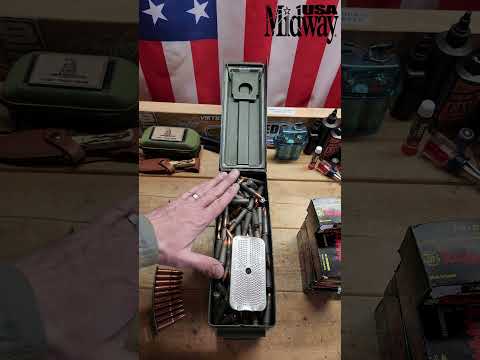
To keep economical ammo viable for years, prioritize a stable, low-humidity environment. Store bulk purchases in sealed, airtight military-style cans with desiccant packs to prevent moisture-related corrosion and powder degradation. Avoid temperature extremes, as repeated thermal cycling can compromise primer sealants and propellant stability. Rotate stock using a simple first-in, first-out system to ensure older rounds get used before fresher batches. Vacuum-sealing plastic bags for long-term storage adds another moisture barrier, particularly for budget-grade steel-case ammunition that is more prone to surface rust. Inspect stored rounds annually for discoloration or loose bullets.
| Storage Method | Moisture Risk | Typical Shelf Life Boost |
|---|---|---|
| Airtight can + desiccant | Low | 5–10 years |
| Original cardboard box | High | 1–3 years |
| Vacuum-sealed bag | Very low | 7–12 years |